

This article is authored by Naresh Chheda, Founding Partner at Avyaan Legal and Sakina Electricwala, Principal Associate at Avyaan Legal.
Environmental regulation in India has long sought to strike a balance between economic development and ecological protection. The requirement of obtaining prior Environmental Clearance (EC) before commencing specified projects under the Environmental Impact Assessment (EIA) Notification, 2006 is one of the cornerstones of this regulatory framework. Yet, in practice, numerous infrastructure, industrial and real estate projects have commenced operations without obtaining such approvals, leading to years of uncertainty over whether these violations could subsequently be regularised.
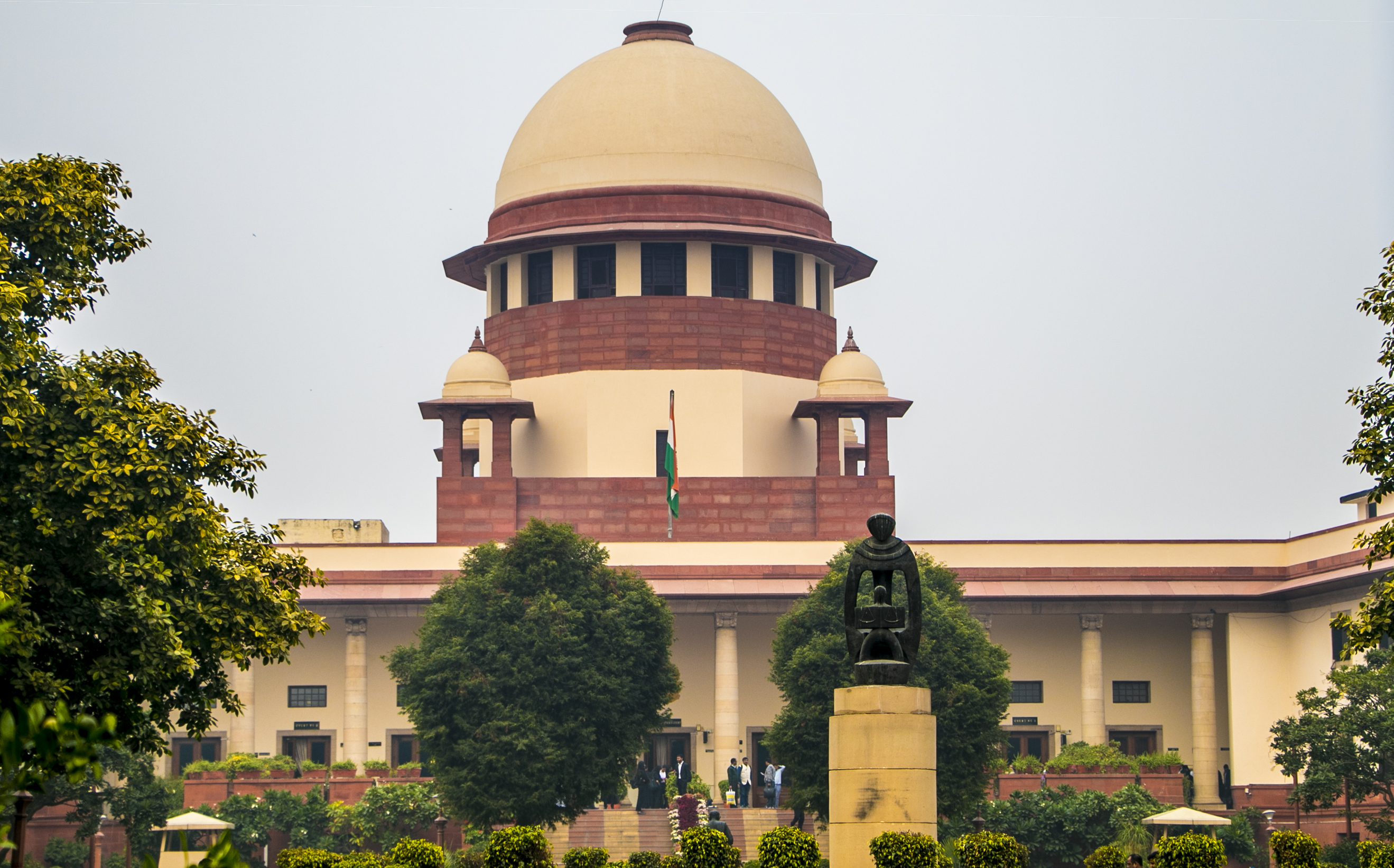
In its landmark judgment in Vanashakti v. Union of India (2026 INSC 761), the Supreme Court revisited this contentious issue and delivered one of the most significant environmental law decisions in recent years. Rather than treating every violation through a rigid lens, the Court recognised the need for a structured regulatory response that protects environmental interests without ignoring the realities of completed or ongoing public and private projects.
The judgment is likely to influence environmental governance, infrastructure development, regulatory compliance and project approvals for years to come.
Background of the Dispute
The litigation centred on the validity of two measures issued by the Ministry of Environment, Forest and Climate Change (MoEFCC):
- The 2017 Notification, introduced as a one-time mechanism allowing certain projects that had commenced without prior environmental clearance to apply for appraisal subject to environmental safeguards and remediation.
- The 2021 Office Memorandum (OM), which prescribed a Standard Operating Procedure for dealing with environmental clearance violations beyond the limited window contemplated by the 2017 Notification.
Environmental organisations challenged these measures on the ground that they effectively created a system of post facto environmental clearances, contrary to the precautionary principles underlying Indian environmental law.
The controversy had already witnessed multiple rounds of litigation. A previous Supreme Court decision (popularly referred to as Vanashakti-I) had struck down both instruments. However, that judgment was subsequently recalled in review, resulting in a fresh hearing before a larger Bench to determine the legality of the regulatory framework afresh.
The Central Questions Before the Court
The Court identified six principal questions requiring determination, including:
- Whether prior environmental clearance under the Environment (Protection) Act, 1986 and the EIA Notification, 2006 is mandatory.
- What legal consequences follow when projects commence without obtaining prior clearance.
- Whether the 2017 Notification is legally valid.
- Whether the 2021 Office Memorandum exceeds the statutory powers conferred under the Environment (Protection) Act.
- What should happen to environmental clearances already granted and pending applications under these instruments.
These questions required the Court to reconcile two competing strands of environmental jurisprudence. On one hand stood decisions emphasising that post facto environmental clearance is fundamentally inconsistent with the precautionary principle. On the other were judgments recognising that, in appropriate factual situations, courts may permit regularisation subject to stringent safeguards instead of directing demolition or closure.
Prior Environmental Clearance Remains the Rule
One aspect of the judgment leaves little room for ambiguity. The Supreme Court reaffirmed that the EIA Notification, 2006 establishes a mandatory system of prior environmental clearance.
The Court carefully traced the evolution of India’s environmental clearance regime from the Environment (Protection) Act, 1986 and observed that environmental appraisal is designed to assess likely impacts before any irreversible activity begins. Public consultation, environmental impact assessment and appraisal lose much of their practical significance if undertaken only after a project has substantially progressed or been completed.
The judgment reinforces that prior clearance remains the statutory norm and continues to represent the first line of environmental protection.
The Court Rejects an Automatic Demolition Approach
Perhaps the most important contribution of the judgment lies in its treatment of violations.
The Court recognised that commencing a project without prior environmental clearance is a serious statutory breach whose necessary implication, by default, remains restoration of the status quo ante – that is, closure, demolition and remediation – in addition to statutory penalties. It held, however, that the Central Government, as the delegate empowered under Section 3 of the Environment (Protection) Act, retains the power to carve out narrow, time-bound exceptions to this default rule by way of a validly issued notification, provided such an exception satisfies the constitutional tests of reasonable classification and proportionality. This power belongs to the delegated legislative process, not to case-by-case discretion exercised by regulators or courts.
The Bench observed that environmental remedies must themselves remain environmentally rational. Ordering demolition of completed hospitals, airports, public infrastructure or industrial facilities may, in some situations, generate greater ecological damage than allowing carefully regulated continuation accompanied by remediation, compensation and strict compliance measures.
This reasoning reflects the Court’s attempt to reconcile environmental protection with proportionality and sustainable development rather than adopting an inflexible approach in every violation case.
Importantly, the Court made clear that this flexibility can only be introduced through validly enacted delegated legislation that itself satisfies the tests of reasonable classification and proportionality – not through an executive circular or office memorandum operating outside that framework. That distinction proved decisive to the fate of the two instruments actually under challenge, discussed below.
Distinguishing Between the 2017 Notification and the 2021 Office Memorandum
A notable feature of the judgment is the Court’s distinction between the two impugned regulatory instruments.
The Court acknowledged that the 2017 Notification was conceived as a limited statutory measure intended to address a finite class of existing violations through environmental appraisal, damage assessment and remedial measures. The notification operated within a defined timeframe and was presented as a one-time regulatory exercise to bring non-compliant projects within the environmental framework.
The 2021 Office Memorandum, however, attracted closer scrutiny because it established a continuing procedure for dealing with violation cases after the expiry of the 2017 framework. This raised concerns regarding the extent of executive power under the Environment (Protection) Act and whether an administrative office memorandum could effectively create an ongoing mechanism for post-violation environmental appraisal.
On examination, the Court upheld the 2017 Notification as valid delegated legislation – a narrowly tailored, time-bound measure within the Central Government’s rule-making power under Section 3 of the 1986 Act. The 2021 Office Memorandum, by contrast, was held invalid. Being a bare executive instruction with no cut-off date and no defined class of eligible projects, it was found to supplant rather than supplement the 2006 Notification, and to fail the tests of reasonable classification and proportionality under Articles 14 and 21. The Court accordingly quashed the 2021 Office Memorandum, albeit with prospective effect, and to that extent overruled its own earlier decisions in Pahwa Plastics and D. Swamy insofar as they had treated the Office Memorandum as valid and as issued in pursuance of the 2017 Notification.
The Court therefore undertook an extensive examination of the statutory powers under the 1986 Act, earlier Supreme Court precedents and the scope of delegated environmental regulation before arriving at its conclusions.
Reconciling Earlier Supreme Court Decisions
A significant portion of the judgment addresses an issue that has troubled environmental litigation for several years.
Earlier decisions such as Common Cause v. Union of India and Alembic Pharmaceuticals Ltd. v. Rohit Prajapati had strongly criticised post facto environmental clearances. At the same time, later decisions including Electrosteel Steels Ltd., Pahwa Plastics and D. Swamy had permitted projects to continue in particular factual circumstances after considering proportionality and broader public interest.
Rather than treating these authorities as irreconcilable, the Supreme Court explained that the apparent conflict largely arose from focusing exclusively on broad legal observations while overlooking how relief had actually been moulded in individual cases. The Court observed that earlier judgments had consistently recognised the importance of environmental compliance while also permitting balanced remedies where immediate closure or demolition would itself produce undesirable consequences.
That reconciliation had limits, however. The Court held that Electrosteel’s suggestion that the 1986 Act and the 2006 Notification themselves accommodate an ex post facto clearance was incorrect, since it overlooked the mandatory character of the prior clearance requirement. It also overruled Pahwa Plastics and D. Swamy to the extent those decisions had upheld the 2021 Office Memorandum as valid and treated it as issued in pursuance of the 2017 Notification.
This clarification is likely to reduce uncertainty in future environmental litigation involving regulatory violations.
A Shift Towards Proportionate Environmental Governance
An important theme running throughout the judgment is proportionality.
The Court repeatedly emphasised that environmental regulation should neither encourage non-compliance nor produce remedies that ultimately undermine environmental protection itself.
Where violations are established, regulators remain empowered to impose substantial penalties, require remediation, assess environmental damage, prosecute where necessary and ensure future compliance. However, the Court recognised that environmental governance cannot be reduced to a binary choice between unconditional regularisation and mandatory demolition.
Instead, decision-makers must evaluate each case by considering factors such as:
- the nature of the violation;
- the environmental impact caused;
- whether the project is otherwise legally permissible;
- the stage of completion;
- public interest implications; and
- the feasibility of effective environmental remediation.
This represents a more nuanced regulatory philosophy than either automatic regularisation or automatic closure.
Practical Implications for Businesses
The judgment carries important lessons for developers, infrastructure companies, manufacturers, mining entities and investors.
First, businesses should not view the decision as relaxing the requirement of prior environmental clearance. The Court unequivocally reaffirmed that obtaining prior EC remains a mandatory statutory obligation.
Secondly, environmental compliance should be integrated into project planning from the earliest stages. Delayed regulatory approvals continue to expose businesses to litigation, financial penalties, project delays and operational uncertainty.
Thirdly, companies facing historical compliance issues should recognise that regulators and courts are increasingly likely to examine factors such as environmental impact, remediation efforts and public interest rather than applying a uniform consequence in every case. Nevertheless, any expectation of routine post facto regularisation would be misplaced.
Fourthly, and most concretely, businesses should note that with the 2021 Office Memorandum quashed, no fresh application for post facto clearance can be made under either the 2017 Notification or the 2021 Office Memorandum going forward. Environmental clearances already granted under these instruments, and applications already pending, remain protected and will be taken to their logical conclusion, but the open-ended regularisation route that many project proponents have relied upon since 2021 is no longer available. Any future amnesty would require a fresh, validly issued notification under Section 3 of the 1986 Act – not an administrative circular.
For lenders and investors, environmental due diligence assumes even greater significance. Regulatory risks relating to environmental approvals may directly affect financing, acquisitions and project timelines.
Conclusion
The Supreme Court’s decision in Vanashakti v. Union of India marks an important development in India’s environmental jurisprudence.
The judgment reaffirms that prior environmental clearance remains fundamental to India’s environmental protection framework while recognising that regulatory responses to violations must remain proportionate, practical and environmentally meaningful. Instead of treating every breach identically, the Court has endorsed a framework that balances environmental protection, statutory compliance, sustainable development and public interest.
Concretely, it upheld the narrow, time-bound 2017 Notification as valid delegated legislation, while striking down the more permissive 2021 Office Memorandum as an invalid, open-ended administrative instrument – quashing it with prospective effect and, to that extent, overruling its own prior decisions in Pahwa Plastics and D. Swamy.
For businesses, project proponents and regulators alike, the message is clear. Environmental compliance cannot be treated as a procedural formality or postponed until after construction begins. At the same time, environmental governance must be capable of responding to real-world situations through carefully calibrated remedies that protect both the environment and broader public interests.
As India continues to expand its infrastructure and industrial base, Vanashakti is likely to serve as a leading precedent in defining how environmental regulation and economic development coexist within the country’s constitutional and statutory framework.